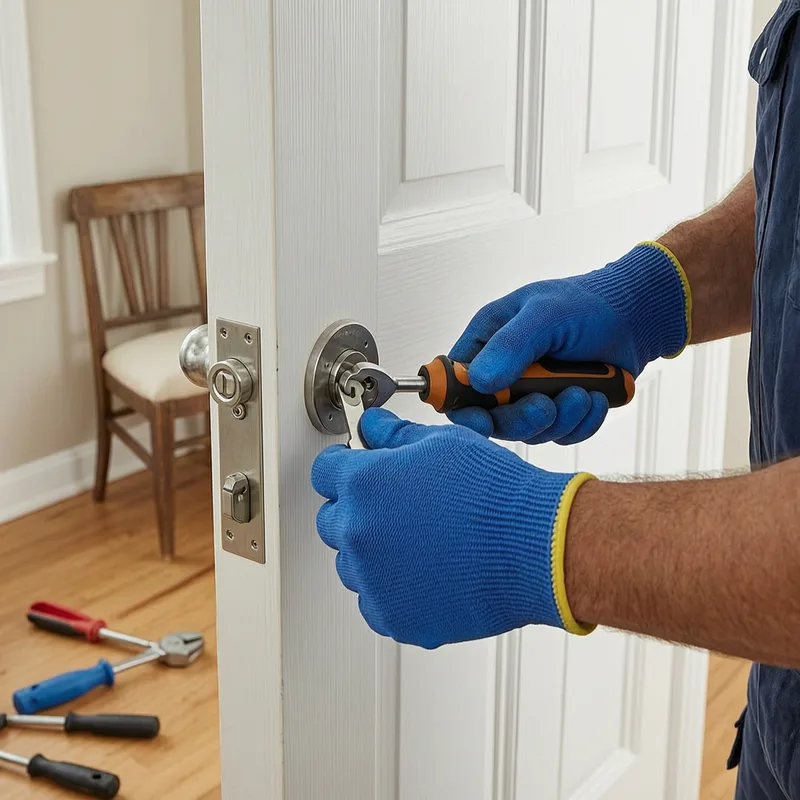
Moving to Germany as an expat or international worker means adapting to new systems—including security standards for your home. Door locks in Germany are not one-size-fits-all. They're governed by strict DIN EN standards, come in several distinct types, and are subject to specific rental laws that differ significantly from many other countries.
Whether you're renting an apartment or have purchased a property, understanding which locks provide genuine security, which meet insurance requirements, and what your landlord can require is essential. This guide breaks down the options available in Germany and helps you make an informed decision about your home security.
We'll walk you through German lock standards, common lock types, what's required under German rental law, and how to choose locks that protect your home while respecting local regulations.
Understanding DIN EN Standards
Germany takes door security seriously, and this is reflected in DIN EN 1627, the national standard for resistance classes of secure doors and windows. This standard defines six resistance classes (RC1 through RC6), each representing increasing levels of burglary resistance. Understanding these classes helps you evaluate whether a lock meets your security needs and your insurance requirements.
RC1 and RC2 are the basic levels, suitable for low-risk areas and providing protection against simple attempts. Many standard apartment locks in Germany meet RC2. RC3 and RC4 are mid-range, offering better resistance and commonly required by insurance companies (Hausratversicherung). RC5 and RC6 are high-security grades designed for valuable items or high-risk locations.
When shopping for locks, look for certification labels or documentation confirming the DIN EN class. This isn't marketing—it directly affects your insurance coverage. Many policies require a minimum RC3 lock to cover theft losses. Ask your landlord or insurance provider what class they require before investing in new locks.
Common German Lock Types
German apartments typically use one of three main lock cylinder types, each with distinct characteristics. The Profilzylinder (profile cylinder) is the most common in residential settings. It's a single-cylinder design where the key turns the lock mechanism directly. These are affordable, widely available, and range from simple to high-security models. Many ABUS and EVVA models use this design.
The Doppelzylinder (double cylinder) has keyholes on both sides of the door, allowing locking from inside and outside. These are common in older German apartments and buildings with glazed doors or windows nearby. Be cautious: some rental agreements prohibit these without landlord approval because they can block emergency exits.
Knaufzylinder (knob cylinders) combine a knob with the lock mechanism and are less common in modern apartments but still found in older buildings. They tend to be less secure than profile cylinders and are being phased out.
When replacing a lock, measure your existing cylinder first. German standards specify common sizes (usually 30/30mm, 30/40mm, or 35/35mm). Compatibility matters; installing an incorrect size leaves gaps that compromise security.
Tenant Rights and Rental Law
If you're renting in Germany, understand that your landlord has rights over the locks on your apartment door. Under German rental law (Mietrecht), you cannot arbitrarily change or upgrade the main entry lock without permission. This protects the landlord's access rights and property security.
However, you can typically install additional interior locks (like bedroom or bathroom doors) without permission. Some landlords allow tenants to upgrade the main lock to a higher-security model if the tenant pays for it and agrees to restore the original at move-out. Always ask your landlord before purchasing new locks—disagreements about locks damage relationships and can affect your security deposit return.
If you're concerned about security and your landlord won't upgrade locks, our locksmiths serve throughout Germany and can advise on alternatives like installing a second lock (Zusatzschloss) that doesn't permanently alter the existing one, or installing a chain lock or door bar for additional security.
Recommended Lock Brands and Selection Tips
Several German-made and internationally recognized brands dominate the German market. ABUS is a trusted German manufacturer offering locks at every price point, with many models meeting RC3 and RC4 standards. EVVA (Austrian-made, widely available in Germany) produces high-security cylinders with patented designs. DOM is another respected German manufacturer specializing in secure locks. These brands are available at Baumarkt stores (like Bauhaus or OBI) and through locksmith suppliers.
When selecting a lock, consider your situation: Are you renting or owning? What DIN class does your insurance require? How much do you want to spend? Budget locks start around €15–30, while certified high-security models range from €60–150+. Installation by a professional locksmith costs €50–100 but ensures proper fit and function.
Frequently Asked Questions
English-speaking locksmiths available 24/7 across Germany.